
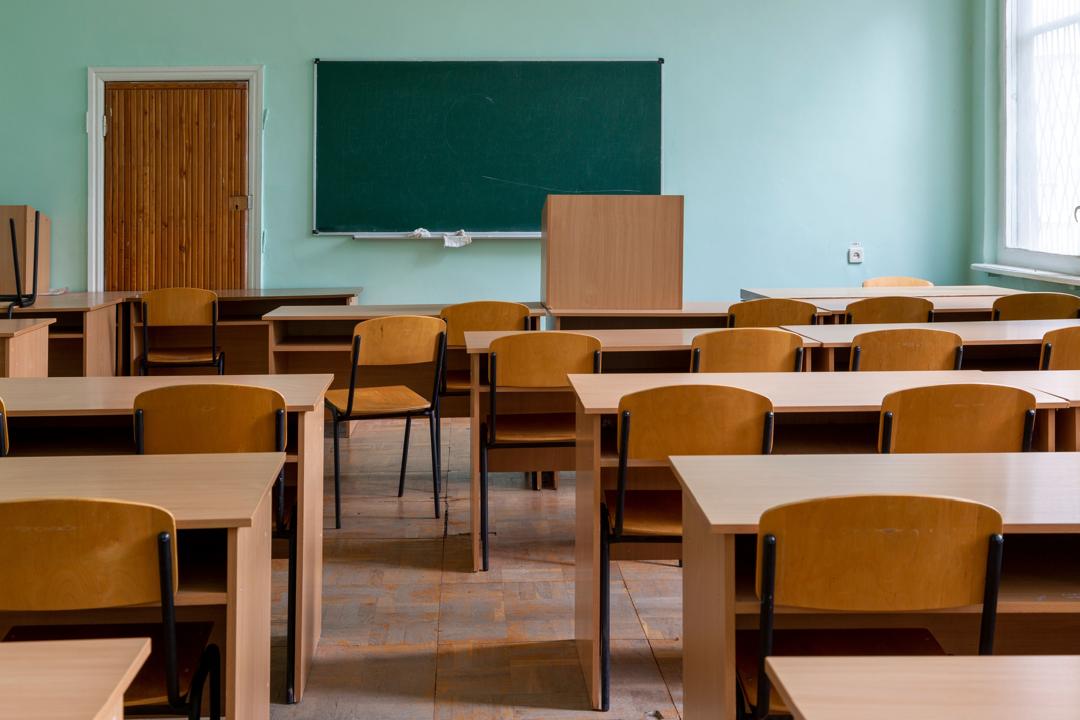
A New Structure Won’t Fix an Old Problem
Nigeria wants to scrap the JSS/SSS split for one continuous 12-year system. The gap it’s meant to close is real, but the reform stops at the school gate, while the reasons children actually leave (hunger, instability, cost) sit at home.
Nigeria is about to reorganise how its schools work. The Federal Ministry of Education wants to scrap the split between Junior and Senior Secondary School and run one continuous 12-year basic education system instead. No disarticulation. No checkpoint at JSS3, where a child either moves up or quietly falls out of the system for good.
The case for it isn't hard to follow. Nigeria has roughly 80,000 public primary schools and only 15,000 junior secondary schools. That gap alone tells you why so many children finish primary school and go no further; there simply isn't a next classroom for most of them to walk into. More than 20 million drop out before senior secondary. The Minister of Education has said plainly that the current structure has failed.
We think he's right about that. We're just not convinced that redrawing the structure is what fixes it.
Because structure was never really the thing holding children back. A school can have every grade level in the correct order and still fail a child when there's no teacher in the room, no security around the compound, no reason for a family scraping by to choose a school day over a day's earnings. That's the question education advocates keep putting to the Minister, and it hasn't gone away: what problem does this actually solve? A hungry child can't concentrate long enough to learn, and it makes no difference what the classroom is labelled. Moving six years into a different shape doesn't reach any of that.
We've watched this movie before. The 2025 curriculum reform trimmed subject overload and brought the content up to date, which was a real improvement, and worth saying so. But it still had no national framework for children with disabilities. No adapted curriculum, no teachers trained for different ways of learning, nothing built around them. A good reform that stopped short, because it fixed the system and not the child sitting inside it.
The 2026 budget says much the same thing, only in figures. N3.52 trillion sounds like a lot until you hold it against the size of the problem. It's 6.1% of national spending; UNESCO recommends somewhere between 15 and 20%. Eighteen million children are out of school. Three in four can't read and understand a simple, age-appropriate text by the time they're ten. You don't close a gap that wide by rearranging anything. At some point the ambition on paper has to be matched by money behind it, and a new structure laid over that funding hole is still a structure sitting on the same hole.
The reform that actually reaches a child usually doesn't look like a policy at all. It looks like a meal, so the child can sit through a full day instead of leaving at noon. A home steady enough that nobody gets pulled out mid-term when the family relocates or comes apart. A mother who can cover the clinic visit and the school fees in the same month, rather than choosing between them. None of that turns up in a Ministry press release, and none of it gets solved by moving the line between JSS and SSS. But it's a lot closer to where those 20 million children actually are.
Nigeria has never been short of reform proposals. What it's been short of is reform that follows the child home, into the kitchen, the clinic and the household budget, instead of stopping at the school gate.
Share this story
More stories you might like
You don't need to be rich to save a life: how ₦2,000 or ₦5,000 goes further than you think
When we told a father what had come in for his child's care, he said the money was a whole lot. It was ₦180,000. Here's the arithmetic behind that.

Why Most Nigerian Children Don't Get the Healthcare They Deserve
Most Nigerian children don't suffer because their illnesses are untreatable. They suffer because healthcare is too expensive, too distant, too understaffed, or arrives too late. A look at the chain of failures behind preventable child deaths, and what it would take to fix them
By Adeleye Adebisi
The Children We Failed Are the Threat We Fear
Nigeria’s insecurity crisis didn’t start with guns. It started with children we failed to feed, educate, and protect, and a pipeline from neglected childhood to armed threat we keep refusing to follow upstream.